Other events in this phase
Occupation Reforms in Japan22- Civil liberties directive
- Shidehara Cabinet formed
- Political prisoners released in Japan
- Women's suffrage reform in JapanCurrent record
- Education democratization directives
- State Shinto Directive
- Women’s suffrage and Japan’s first postwar election
From Reform Directive to Promulgated Law
Women’s suffrage in Japan was not merely a later byproduct of the postwar constitution. The National Archives of Japan explains that the Shidehara cabinet began implementing GHQ’s five major reform directives in 1945, including women’s emancipation through suffrage.
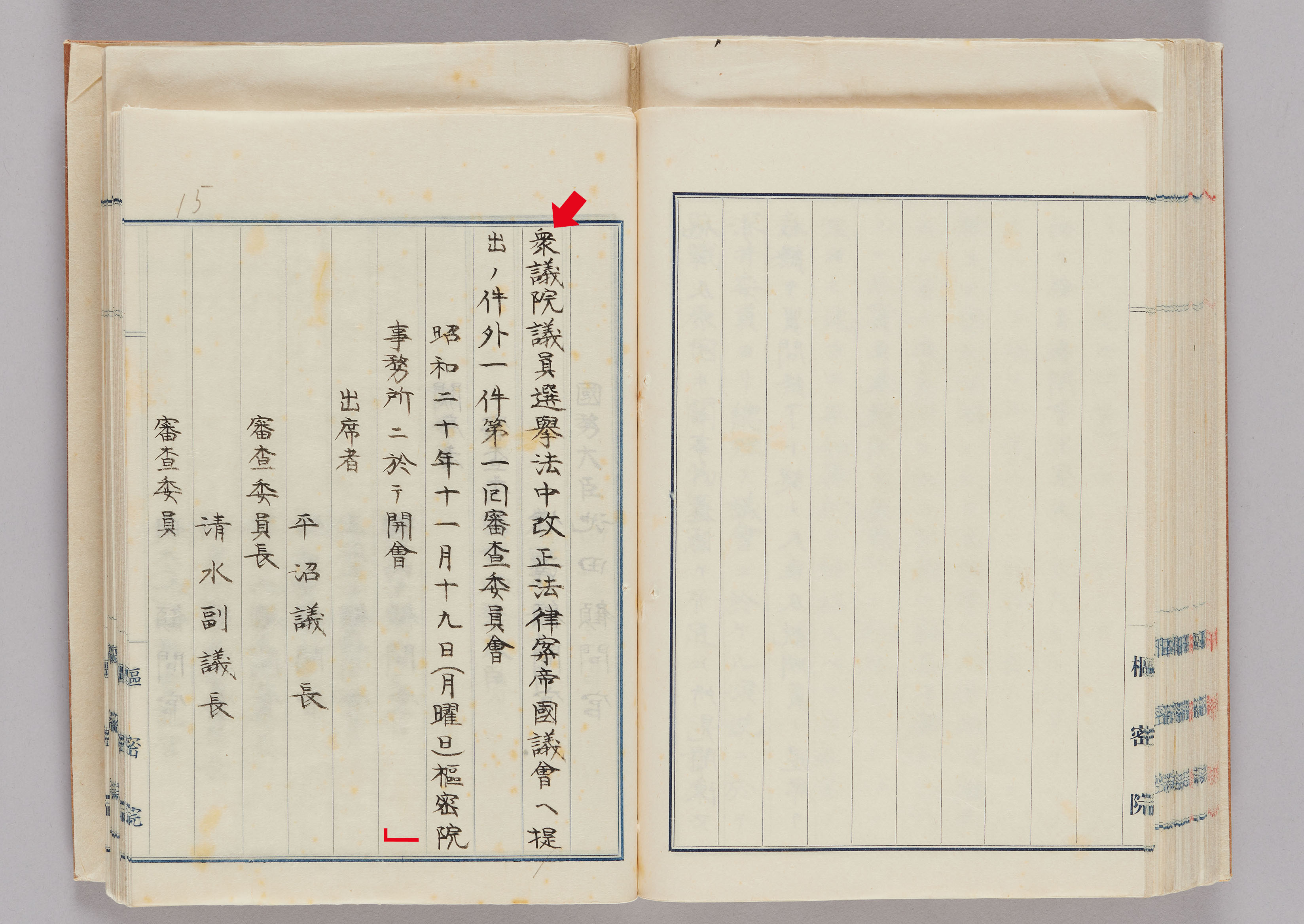
The National Archives’ law record identifies 17 December 1945 as the promulgation date of Law No. 42 revising the House of Representatives Election Law, with related notes specifying women’s suffrage, voting age lowered to 20, and candidacy age lowered to 25.
Political Meaning and the Next Scene
The Privy Council review record shows that suffrage expansion was not just a declaration; it moved through legal revision procedures under the imperial constitutional order. When women voted in the April 1946 general election and 39 women entered the Diet, this record became a hinge between occupation reform and institutional parliamentary change.
Media
Source Trail